Bee Swarm Removal
Bee swarm or hive on your property? We remove swarms and cut out established hives, comb and honey out, cavity sealed. Call 0436389114 for a free quote.
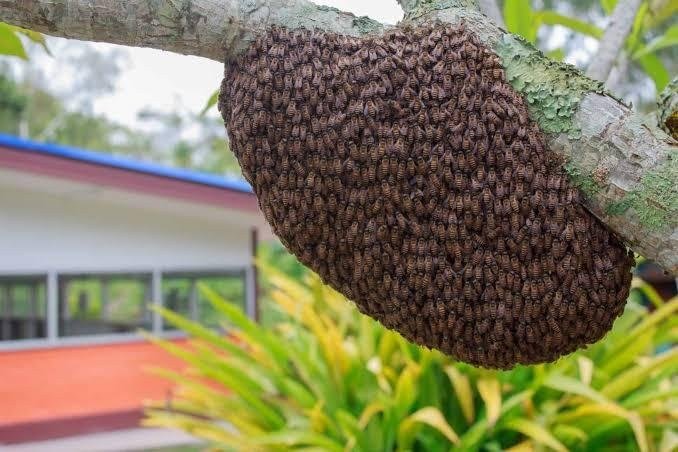
Send a photo, get a straight answer
Send a photo if you can and we will tell you whether it is a swarm or an established hive before anyone quotes you.
Free bee removal quote
No call-out fee. Fixed price before we travel.
How do you remove a bee hive from a wall or roof?
An established colony needs a cut-out. We first work out where the comb actually sits — the flight path shows the entry, but the comb is often somewhere else inside the cavity — then open the smallest access that reaches it, treat the colony, remove the comb and honey, clean the cavity and seal the entry points. The work is carried out by a licensed technician. Leaving the comb behind is what causes the real damage: the honey ferments, stains ceilings and draws ants, rodents and wax moth. Call 0436 389 114 for a free quote.
Swarm or established hive?
They look similar to most people and they are not remotely the same piece of work. Getting this right decides the method and the price.
A Swarm
A cluster hanging in the open with no comb - branch, fence, gutter, even a car mirror. Appeared suddenly, usually docile, often gone in a day or two by itself. Treated and cleared on the spot. The cheapest job we do.
An Established Hive
Steady two-way traffic through one small gap, all day, for weeks. There is wax comb, brood and honey inside a cavity. Needs a cut-out, and it will not resolve itself.
Bees in walls, roofs and chimneys
Honey bees want a dark, dry, defensible cavity with a small entrance. Victoria housing supplies that in a dozen places, and the entry you can see is rarely where the comb has been built.
We trace it properly before opening anything, because opening the wrong section is how a straightforward removal turns into an expensive repair.
- Brick weep holes - the classic entry on a brick-veneer home.
- Wall cavities - through a gap in weatherboard or a perished mortar joint.
- Roof voids and eaves - where the eave lining meets the wall.
- Chimneys and disused flues - common in older homes, and the comb can sit well down inside.
- Floor voids and subfloors - reached through a vent or a gap at the bearer line.
- Meter boxes, compost bays and sheds - smaller cavities, usually easier jobs.
From your photo to a sealed cavity
Nothing is opened until you know the price and what has to happen.
Send a photo or call
A photo from a safe distance usually settles swarm versus hive immediately, and that decides both the method and the cost.
We identify it properly
Honey bee, wasp, or a harmless native bee that needs nothing done. We will tell you if the honest answer is to leave it alone.
Fixed price before we travel
No call-out fee. You are told what will be opened and what making good involves before anyone starts.
Colony treated, comb out with it
Swarms are treated and cleared. Hives are cut out - bees, comb and honey - and the cavity is cleaned down.
Cavity sealed
Entry points closed while we know exactly where they are, so the next swarm does not move into a cavity that already smells like home.
Why a free swarm collection is not the same thing
If you genuinely have a swarm, a hobbyist collector taking it for nothing is a fine outcome and we will say so. We would rather tell you that than sell you a job you do not need.
The difference appears on structural work. A collector wants the bees. They are not set up to open a wall, remove comb, clean the cavity and seal it - and what gets left behind is the expensive part.
- Honey ferments and runs once the bees stop cooling the comb, staining ceilings and wall linings.
- Ants, rodents and wax moth move into abandoned comb.
- The cavity keeps smelling like a nest, so a future swarm is drawn back to the same spot.
- The entry stays open, because sealing was never part of the job.
- Nobody is responsible for making good if the wall has to be opened later anyway.
Bee hive removal in Victoria at a glance
| Service area | All across Victoria |
|---|---|
| Availability | Seven days, with urgent attendance for swarms at doorways, schools and shopfronts, and for sting-allergy households |
| Method | Full removal of the colony, the comb and the honey. Work carried out by a licensed technician. |
| Swarms | Treated and cleared from branches, fences, gutters and vehicles |
| Established hives | Cut-outs from walls, roof and floor cavities, chimneys and flues |
| Included | Comb and honey removal plus cavity clean-down - not charged as an extra |
| Afterwards | Entry points sealed so a future swarm cannot reoccupy the cavity |
| What we will not do | Tell you removal is legally required when it is not, or quote you for a harmless native bee that should be left alone |
| Fees | No call-out fee. Fixed price given before we travel |
| Contact | Call 0436 389 114 or email info@swiftpestcontrol.com.au |
What moves the price
We quote a fixed price before we travel. We will not publish one number for every job, because a swarm on a low branch and a colony inside a second-storey brick wall are not the same work.
- Swarm or established colony - the biggest factor by far.
- Where the comb sits - chimney, wall cavity and floor void are all different jobs.
- Access - ground level, ladder height, or working off a roof.
- Construction - weatherboard opens and closes far more easily than brick.
- How long it has been there - more comb, more honey, more cleaning.
- Whether you want the cavity proofed afterwards.
We service all across Victoria
We service all across Victoria. Call with your postcode and we will confirm straight away.
Bee removal questions, answered
What is a bee cut-out?
It is what an established colony needs, as opposed to a swarm. Once bees have moved into a cavity they build wax comb and start storing honey, so they cannot simply be scooped up. A cut-out means opening the smallest access that reaches the comb, treating the colony, removing the comb and honey, cleaning the cavity down and closing it back up. It is a building job as much as a bee job, which is why a swarm collector usually will not attempt it.
Why can the comb not just be left in the wall?
Because the bees were the only thing keeping it cool. Once they are gone the honey ferments and runs, and it will stain ceilings, cornices and wall linings from the inside. It then draws ants, cockroaches, rodents and wax moth, so a bee problem turns into a pest problem. The residual scent also marks that cavity as a proven nest site, which makes the next passing swarm far more likely to choose exactly the same spot. Removing the comb is what actually ends the job.
Do you kill the bees?
Yes. We are a pest control business, not a beekeeping service, so the colony is treated and then removed. We would rather say that plainly than promise you a rescue we do not carry out. If you have a swarm in the open and you would prefer it collected by a beekeeper, say so when you call and we will tell you honestly whether that is realistic before you book us. On the safety question - rather than telling you a treatment is “safe”, we can tell you there is no chemical involved at all. Wasps are a different matter and are treated conventionally, which is why we identify what you have before quoting.
How do I know if it is a swarm or a hive?
A swarm is a cluster of bees hanging in the open - on a branch, fence, gutter or even a car mirror - with no comb. It usually appears within an hour, is docile because there is no brood or honey to defend, and often moves on by itself in a day or two. An established hive shows steady two-way traffic in and out of one small gap, all day, for weeks. If it does not stop in the evening the way a passing swarm does, it is established.
Bees are getting into my chimney. Can you get them out?
Yes, and chimneys are common in older homes across Victoria. The flue is a tall, dark cavity that bees find ideal, and comb can be built well down inside it. We work out where the comb actually sits before opening anything, take the bees and comb out, clean down, and then cap or seal the flue so the next swarm cannot use it. Capping without removing the comb first is a common mistake - it traps the mess inside.
Is it illegal to kill honey bees in Australia?
We are not aware of any Victorian or Commonwealth law protecting honey bees the way native wildlife is protected. The honey bee is an introduced species, not protected wildlife, and you will see that claim repeated online without a source behind it. So we will not tell you it is illegal in order to talk you out of a treatment, and we will not tell you we rescue them when we do not.
Will another swarm move in later?
The colony we remove is gone for good. The genuine risk is a new swarm picking the same cavity, because bees are strongly drawn to sites that smell like a previous nest. That is precisely why the comb comes out and the entry gets sealed. Skip either of those and a repeat is likely rather than possible.
What does bee hive removal cost?
The single biggest factor is swarm versus cut-out. A swarm hanging within reach from the ground is the quickest job we do. A colony inside a wall, roof or chimney takes far longer - access to open, comb and honey to remove, cleaning, and making good afterwards - and height, brickwork and how long it has been established all move it. We give you a fixed price before we travel, and there is no call-out fee.
Can you seal it so it does not happen again?
Yes, and it is often the most valuable part. Once a cavity has hosted a colony it will keep attracting swarms until the entry points are closed. We seal weep holes, gaps in weatherboard, unsealed eave lines, vents and open flues after the removal - while we already know exactly where they were getting in, which is the only time you can do it accurately.
Can I just wait for them to leave?
If it is a swarm resting in a tree away from doors and paths, often yes - wait two or three days and you may have no bill at all. We will tell you when that is the sensible option. What does not resolve itself is a colony that has moved into a structure. That keeps building comb and honey through the season, and every month it stays makes the removal and the clean-up bigger.
Do you do urgent bee callouts?
Yes. A swarm that lands somewhere awkward - a doorway, a school, a shopfront, a car - is treated as urgent, as is any household where someone has a sting allergy. Call rather than using the form for anything urgent. If someone shows swelling of the face or throat, difficulty breathing or dizziness after a sting, call 000 first.
What if they turn out to be wasps?
Then we switch method and you are still in the right place - wasps are our main trade. They are treated at the nest entrance, usually at dusk, and the nest is bagged and taken away. Send a photo from a safe distance when you enquire and we will tell you which you have before anyone quotes you.
Bees in a wall, roof or chimney?
Free quote, no call-out fee, and the comb comes out with the colony. Seven days across Victoria.
Swarm in the open, or bees in a wall?
Colony treated, comb and honey removed, cavity sealed. Send your details and we will call you straight back.
Free bee removal quote
No call-out fee. Fixed price before we travel.