Wasp Removal Masters
Wasps at your place? We identify the species, treat the nest at its entrance and remove it, across Victoria. Call 0436389114 for a free quote.
Get a free wasp control quote
Send a photo if you can. We will tell you which wasp you have and what it actually needs before anyone quotes you a price.
Free quote
No call-out fee. Fixed price before we travel.
What is the correct way to control wasps in Victoria?
Identify the species first, then treat the nest at its entrance, usually at dusk, using a product registered for wasp control and applied to label. The species decides everything: European wasps nest out of sight in cavities and in the ground and sting repeatedly, paper wasps build a visible open comb, and mud daubers usually need nothing done. At dusk the whole colony is home, so returning workers carry the treatment through the nest instead of only the wasps at the opening being hit. Never block the entry hole — a sealed colony chews inward through the plaster and ends up inside the house. Call 0436 389 114 for a free quote, seven days.
Wasp control across Victoria
Every job starts with identification, because the species decides the method, the urgency and what it should cost.
European Wasp Control
Bright yellow and black, flies with legs tucked in, nests hidden in cavities or underground. Stings repeatedly and defends the nest as a group - the priority job.
Paper Wasp Nests
Slimmer, orange-brown, legs dangling in flight. Builds the open grey umbrella comb under eaves, pergolas and in shrubs. Less aggressive, but it will defend the nest.
Nests In Roofs And Walls
Behind plaster, in eaves, chimneys and roof voids. We trace the flight path to where the nest actually sits rather than opening the wall where you see them going in.
In-Ground Nests
Colonies in lawns, garden beds and under slabs or retaining walls. Easy to mow over without noticing, which is exactly how multiple-sting incidents happen.
Commercial Wasp Control
Cafes, schools, childcare, warehouses and body corporates. Attendance outside trading hours where you need it, with documentation for your records.
Bee Removal
Bees are not wasps. A swarm hanging in the open and a colony established inside a wall are two different jobs, and we do both. Bee removal →
Wasp, bee, or something harmless?
More than half the calls we take start with "there are wasps everywhere". Often there is one nest, sometimes there is none and they are foraging from a neighbour, and occasionally they turn out to be honey bees, which is a completely different job.
These are the tells you can check from a safe distance, without going near anything.
- European wasp - bright yellow and black, thick-set, legs tucked in when flying. Traffic in and out of one small point all day.
- Paper wasp - slimmer, orange-brown, legs dangling. Visible open grey comb under an eave or pergola.
- Honey bee - furry and thick-set rather than glossy, usually calmer, and often a dense cluster rather than individual flyers. We handle these as a bee job, not a wasp job.
- Mud dauber or potter wasp - small mud tubes or pots on a wall or in a shed. Solitary and harmless. Usually needs nothing.
- Hover fly - yellow and black but only two wings, hovers in one spot and cannot sting at all.
- No nest at all - if traffic never converges on one point, they may be foraging from a nest on a neighbouring property.
Where the nest is actually hiding
The wasps you can see are rarely where the nest is. European wasps in particular build out of sight, and the only clue is a steady stream converging on one small opening.
We follow that flight path back to the real entry point before treating anything - which is the step a can of spray can never replace.
- Wall cavities via a weep hole, a gap in the weatherboard or a cracked mortar joint.
- Roof voids and eave lines, or under displaced ridge capping.
- In the ground - an old rodent burrow, or a gap under a slab, retaining wall or garden edging.
- Under decking, in sheds and behind stacked timber.
- Chimneys and disused flues, common in older homes across Victoria.
- Bin enclosures, compost bays and pergolas, where food waste and shelter sit together.
From your photo to the nest gone
Five steps, and the price is fixed before anyone travels to you.
Send a photo or call
Tell us what they look like, where they are going in, and whether anyone has been stung. A photo from a safe distance usually settles the species immediately.
We identify it
European, paper, mud dauber, or honey bees, which are a different job again. If the honest answer is that it needs nothing done, we tell you that.
Fixed price before we travel
No call-out fee, so you are never charged just for us arriving, and the figure does not move once it has been quoted.
Treated at the entrance, at dusk
A product registered for wasp control, applied to label, into the nest entrance while the colony is home and returning workers will carry it through.
Nest removed and entry points shown
Accessible nests are bagged and taken away, and we point out the gaps that let them in so next spring does not repeat this year.
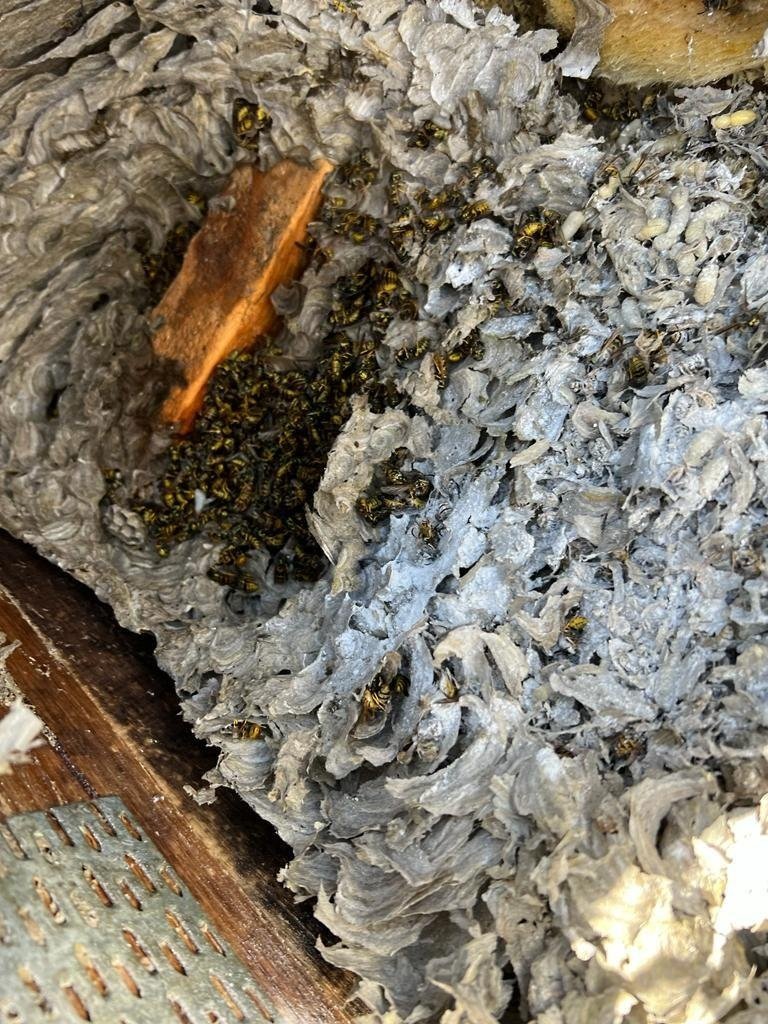
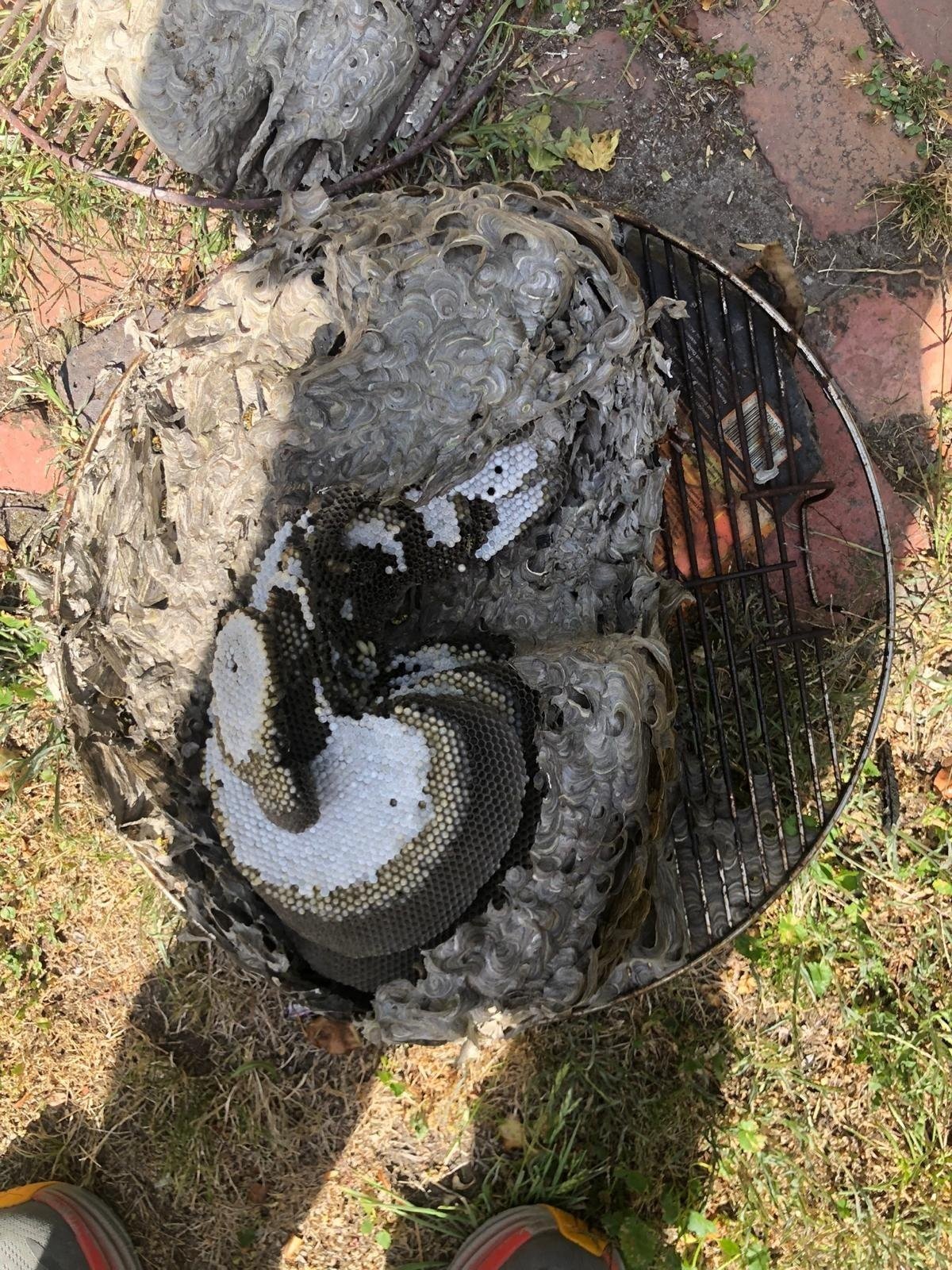
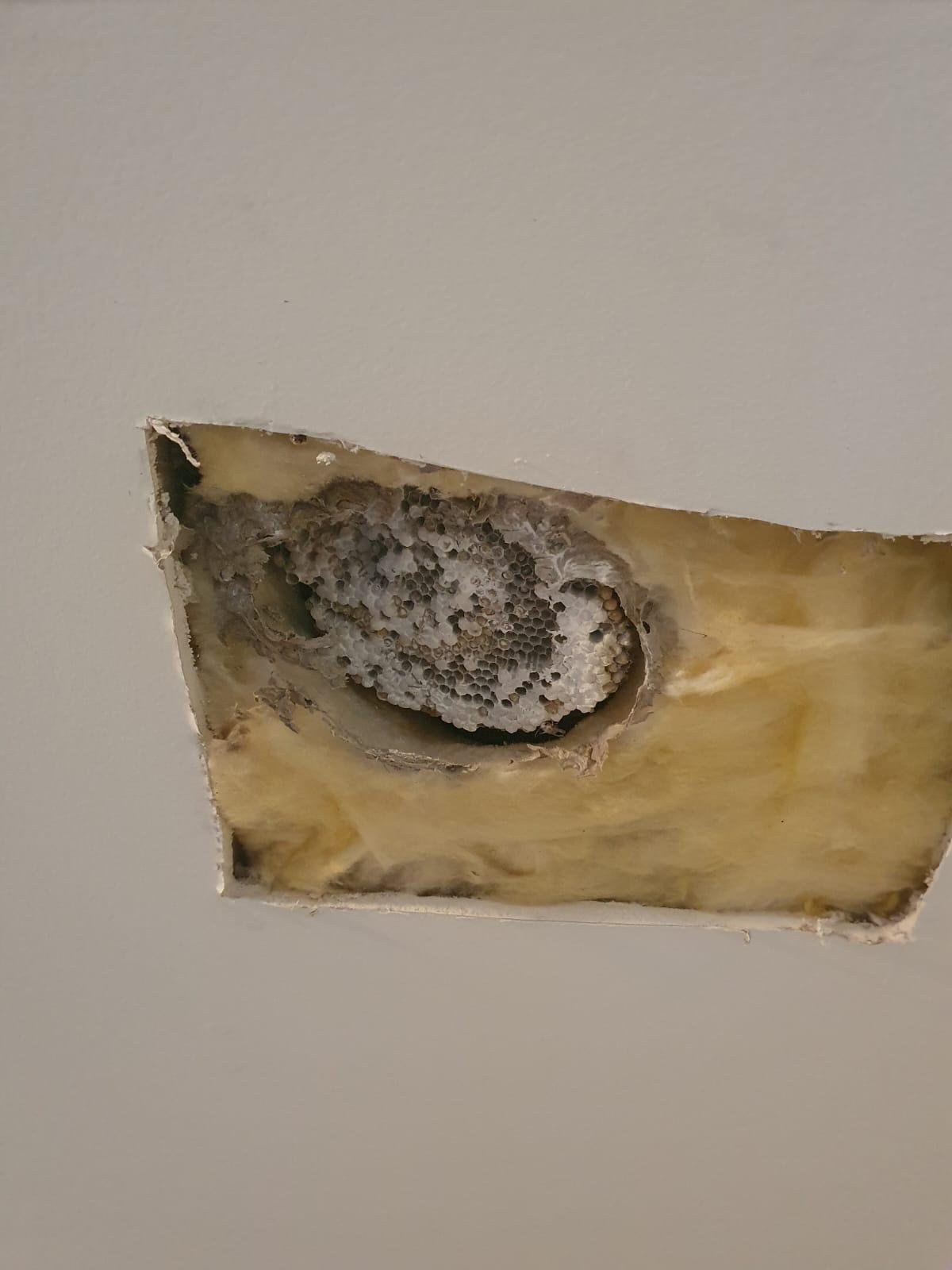
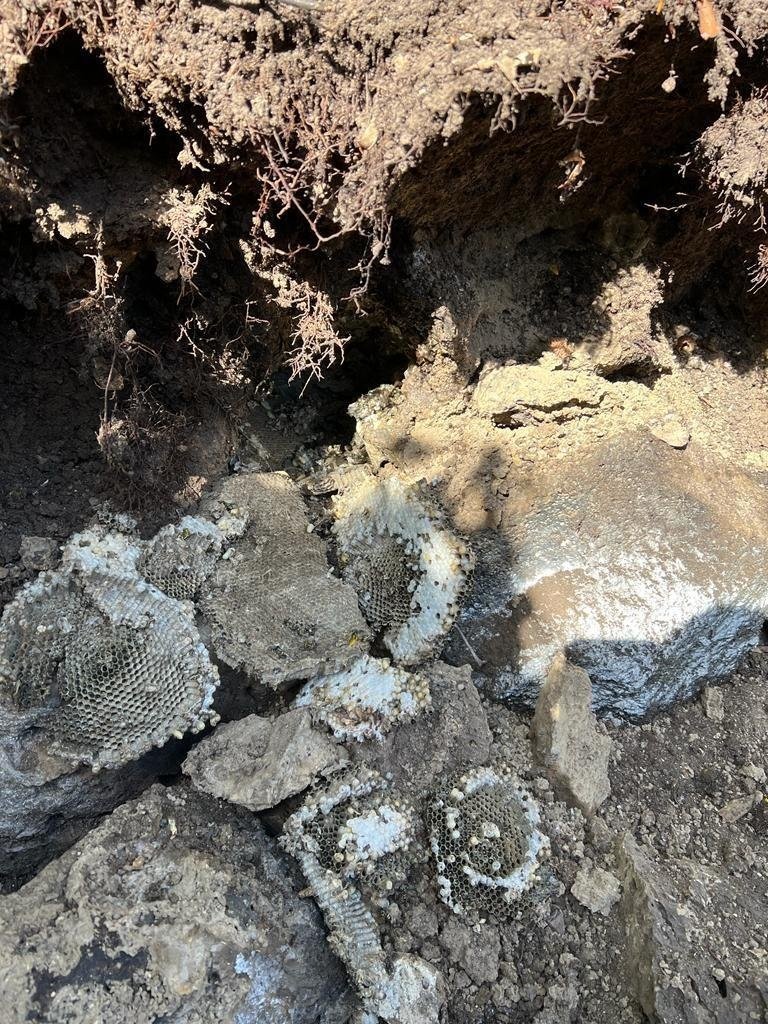
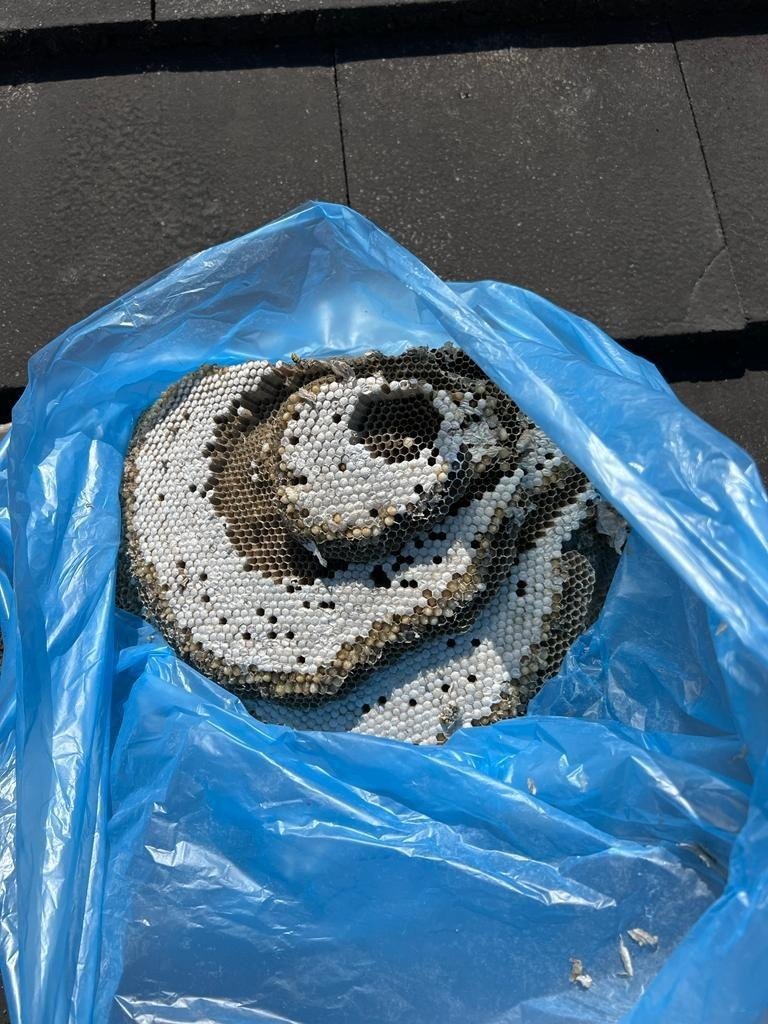
Real nests from jobs across Victoria
Our own photographs, not stock images. Each one began as a single hole somebody walked past for weeks.
Four things that make a wasp problem worse
Nearly every dangerous situation we attend began with a sensible-sounding attempt to handle it privately. These four reliably backfire.
- Do not block the entry hole. The colony chews inward through the plaster lining and ends up inside the house.
- Do not disturb the nest in daylight. Half the colony is out foraging and returns to a disturbed nest while you are still standing there.
- Do not work off a ladder beside an active nest. The fall is the serious injury, not the stings.
- Do not pour petrol or boiling water into a ground nest. It rarely reaches the brood, it contaminates your soil, and it provokes the colony.
What actually moves the price
We quote a fixed price before we travel and there is no call-out fee. We will not publish one figure for every job, because these genuinely change it.
- The species - a European wasp nest and a paper wasp comb are not the same piece of work.
- Where the nest sits - an eave at ground level versus a wall cavity, a subfloor or a roof at height.
- How safely it can be reached - ladder work and roof access take time and gear.
- How many nests - properties near parkland or a creek line often have more than one.
- Whether it can be treated on the first visit, or needs a dusk return.
- Whether you want entry points sealed afterwards so it does not recur.
Wasp control in Victoria at a glance
| Service area | All across Victoria |
|---|---|
| Availability | Seven days including weekends, with 24/7 emergency callouts |
| Response | Same-day attendance where available; prioritised for stings and for nests beside doors, play areas and workplaces |
| Species handled | European wasp (Vespula germanica), English wasp, European and Australian paper wasps, mud daubers and potter wasps |
| Method | Treated at the nest entrance, usually at dusk, with products registered for wasp control and applied to label |
| Nest removal | Accessible nests are bagged and taken away; where a nest sits deep in a sealed cavity we advise honestly whether opening it is worth it |
| Bees | Swarms cleared and hives cut out, comb and honey out with them — see bee removal |
| Fees | No call-out fee. Fixed price given before we travel |
| Contact | Call 0436 389 114 or email info@swiftpestcontrol.com.au |
We service all across Victoria
We service all across Victoria. If your area is not listed, call with your postcode and we will confirm straight away.
Wasp control questions, answered
How do I know which wasp I have?
Look at two things: the colour and how it flies. European wasps are bright yellow and black, thicker-set, and fly with their legs tucked in - their nest is hidden in a cavity or in the ground, so you usually see only a stream of traffic at one small point. Paper wasps are slimmer and more orange-brown and fly with their legs dangling - they build the open grey umbrella comb you can see under an eave. Mud daubers build small mud tubes and are essentially harmless. Send a photo from a safe distance and we will tell you before quoting.
Why does the species matter?
Because it changes the method, the urgency and the price. A European wasp nest inside a wall needs the entrance treated at dusk and is a genuine hazard near a doorway. A paper wasp comb under an eave is a much smaller job. A mud dauber or potter wasp usually needs nothing done at all, and we will say so rather than sell you a treatment. Quoting before identifying is how people end up paying for the wrong job.
How is the nest actually treated?
At the nest entrance, usually at dusk, with a product registered for wasp control and applied to its label directions. Dusk matters because the foraging workers are back inside by then, so the entire colony is present. Returning wasps carry the treatment deeper into the nest, and that is what kills the colony rather than only the wasps visible at the opening. Accessible nests are then bagged and removed.
Should I block the entry hole?
No. It is the most common mistake and it reliably makes things worse. A sealed colony does not die - it chews a new way out, and the softest material is almost always the internal plaster lining rather than the external wall, so the wasps end up inside the house. Leave the entrance alone so it can be treated through, and seal it afterwards once the colony is dead.
What does wasp control cost in Victoria?
It depends on the species, where the nest is and how safely it can be reached. A paper wasp comb at ground level is quick; a European wasp nest in a wall cavity, under a slab or at height takes longer and needs more equipment. The number of nests matters too. We give you a fixed price before we travel and there is no call-out fee, so you are never charged just for us arriving.
Do you do same-day callouts?
Same-day attendance is available on most days, and we prioritise anything where someone has been stung or the nest sits beside a door, a play area or a workplace. We will not promise a time we cannot hold to - call and we will tell you the genuine earliest we can be there, seven days a week including weekends.
Are European wasps a notifiable pest in Victoria?
No. Agriculture Victoria records the European wasp as so widespread in Victoria that it is now considered naturalised and is no longer a notifiable pest. There is no legal duty to report or remove one, so be cautious of anyone implying otherwise to pressure a booking. The reason to act is practical: European wasps sting repeatedly and defend the nest as a group.
Can a nest survive winter?
Usually the colony dies off, but not always. Agriculture Victoria notes that mild southern winters allow some nests to survive, and an overwintering nest begins the next season with a head start rather than from scratch, so it can grow very large. If you saw heavy traffic at the same spot last autumn, have it checked rather than assuming winter handled it.
Do you treat bees as well?
Yes, and completely differently. Swarms are treated and cleared; colonies in a wall or chimney are cut out so the bees, comb and honey all come out before the cavity is sealed. See our bee removal page. If you are not sure whether you have wasps or bees, send a photo - that is exactly the sort of thing we identify.
Is a supermarket spray worth trying?
On a small paper wasp comb you can reach from the ground, occasionally. On a European wasp nest, no. The can reaches the wasps at the entrance, not the colony inside the cavity, so the nest survives and becomes far more defensive afterwards - which makes the professional job harder and the wait more dangerous. Ladder work beside an active nest is also how people get badly hurt, from the fall rather than the stings.
Is the treatment safe around children and pets?
The product is placed into the nest entrance rather than sprayed across open areas, so exposure is very limited, and you get a clear re-entry time before we start. We ask about children, pets, fish ponds, chickens and vegetable gardens during the inspection so the plan suits your property. What we will not do is claim a pesticide is “100% safe” - no honest operator can promise that.
Which areas do you cover?
All across Victoria. Call 0436 389 114 with your postcode and we will confirm immediately, including telling you if you fall outside our area rather than leaving you waiting on a booking.
Not sure what you have? Send us a photo.
We identify it, quote a fixed price, and there is no call-out fee. Seven days across Victoria.
Want it dealt with this week?
Leave your details and we will call you back with a fixed price. Seven days, including weekends.
Free quote
No call-out fee. Fixed price before we travel.